CHECK YOUR AIR, STAY SAFE
According to DAN research, 41% of diving accidents occur due to running out of air; divers lose their lives either by drowning or by making rapid, uncontrolled ascents.
As a CCR Instructor Trainer with over 30 years in a professional diving career, I was extremely surprised when I first encountered this data. After all, all dive training begins with warnings such as “never hold your breath” and “check your air gauge frequently,” and every pre-dive briefing emphasizes regular air checks. Yet it appeared that these warnings were not very effective in real life.
Why?
I learned the answer through personal experience.
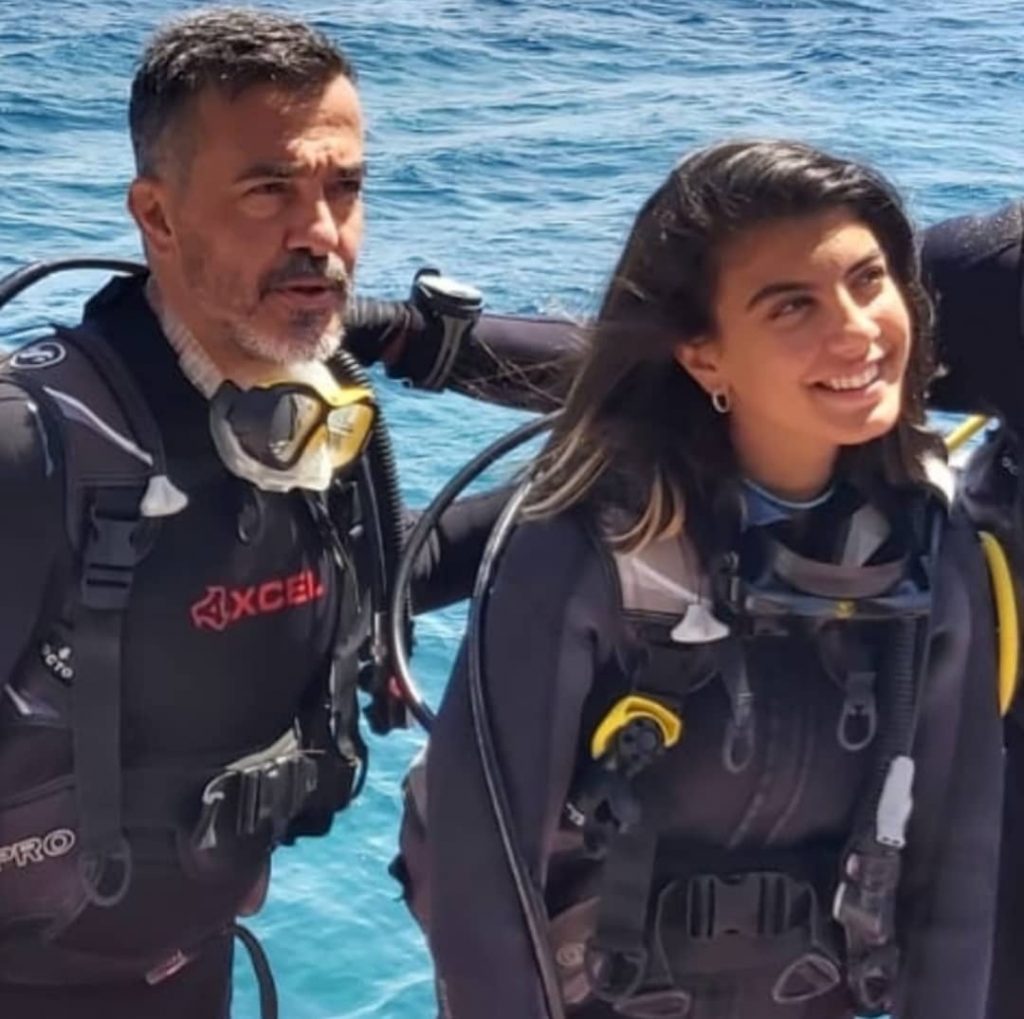
My daughter Derinsu is 17 years old and still a Scuba Diver. As every father who is also a diving professional will understand, diving with her and sharing her excitement is a great joy. Watching her passion and skills improve day by day is a source of pride. To make sure she has received good training and is safe, we dive together whenever possible.
One such day stands out.
The water temperature was 28°C, and visibility was excellent. Since my priority is for my daughter to grow into a safe diver, while she was enjoying the underwater life, I was—just as on every dive—making sure we carried out frequent mutual checks. After about 40 minutes, I noticed her air was approaching 50 bar and signaled to end the dive. At a depth of 12 meters, we headed toward our boat. We were in an area with heavy boat traffic, and since there were many anchors and chains at our exit point, we planned to ascend using an SMB.
At that moment, however, we noticed that the chains of three boats had become entangled and that a caretta caretta (loggerhead sea turtle) was trapped among them.
Seeing such a large creature for the first time, Derinsu became very excited. She quickly swam toward it and began pulling one of the chains. Instinctively, I followed her and started helping immediately. After a few minutes, the turtle was freed. It swam up to us, almost as if to thank us, and then quickly left the area.
Even underwater, I could see my daughter’s happiness, and as a father, I was just as happy as she was to share such a memory together.
However, when we came out of that special moment and I asked her to check her air once again, we saw that she had only 10 bar left. We completed the dive safely and returned to the boat, but both my daughter—still a novice diver—and I—an experienced diving instructor—were aware that we had made a critical mistake.
Derinsu had seen a large animal, become excited, and exerted herself while pulling the chain. As a beginner, she was not aware that under such conditions air consumption increases significantly, nor that she needed to check her gauge more frequently. I, on the other hand, had seen hundreds of carettas and, as a mixed-gas diver, had conducted dives in much deeper waters. Because we were only at 12 meters, I underestimated the situation and neglected gauge checks.
In other words, although our experience levels were different, the mistake was the same. Whether taking photos or videos, watching marine life, focusing on a task, or even under the adverse effects of nitrogen—this is a simple mistake any diver can make, yet one that can be fatal under different conditions.
Had I experienced a similar incident alone, I might not have reflected on it much. After all, modern dive computers and transmitters—especially those used in technical diving—alert us with sound or vibration when air reaches critical levels.
Derinsu’s perspective, however, was very different. She believed there should be a simpler and more accessible solution, one that divers who cannot afford to spend thousands of dollars on a dive computer could also use.
But how?
BUDDY emerged as the answer to this question. We thought long and hard about it together and decided that a light-based system that would warn the diver at regular intervals could work. The light needed to be directly in the diver’s field of view and should flash once every two minutes as a reminder. It needed to detect when the diver entered the water and start working automatically, and then switch to sleep mode automatically once out of the water. After about 20 prototypes, we succeeded in developing BUDDY.
Stick it to the outside of your mask with double-sided tape (usually toward the lower corners) and forget about it. When you enter the water, small channels fill with water and BUDDY flashes like a wink. After that, it lights up every two minutes, reminding you—just like a real buddy—to check your air supply, depth, and, if applicable, your actual dive buddy. Stay aware of your situation. When you finish the dive and exit the water, the water drains from the channels and BUDDY switches to sleep mode. It will stay with you for approximately 200 hours of diving and works safely down to 200 meters.
We have been using it for about a year, and it definitely works. Considering that a recreational dive lasts around 50 minutes on average, it provides 25 reminders—and it is really not possible to ignore that many reminders.
Please do not forget your real buddy while using it. Being a BUDDY to divers we have never met at dive sites around the world is truly exciting—we will be winking at you safely.
CHECK YOUR AIR, STAY SAFE
Respectfully,
Cuneyt CAKIN 
CCR Instructor Trainer